The information on this website is general in nature and does not take into account your objectives, financial situation, or needs. Consider seeking personal advice from a licensed adviser before acting on any information.
Truck insurance claims can involve safety checks, evidence gathering, policy review, assessment, repairs, liability decisions and settlement. This guide explains the usual process for Australian truck operators after an accident, theft or damage event.
When a truck is involved in an accident, stolen, damaged in a storm or affected by a cargo-related incident, the insurance claim process can feel stressful and unfamiliar. Understanding how truck insurance claims work in Australia can help operators respond calmly, keep records organised and avoid preventable delays.
This article provides general information only. The way a claim is handled depends on your policy wording, the type of cover you hold, the circumstances of the incident, your insurer's processes and any relevant legal or contractual obligations.
What happens first after a truck incident?
The first priority is safety. If anyone is injured, there is a road hazard, dangerous goods are involved or emergency help is needed, contact the appropriate emergency services. Depending on the circumstances, you may also need to notify police, road authorities, a depot manager, a client or another party under your transport contract.
Once the immediate safety issues are managed, operators should usually:
- Record the date, time and location of the incident.
- Take photos of the truck, trailer, cargo, road conditions, damage and surrounding scene where it is safe to do so.
- Collect names, contact details, registration numbers and insurer details from other parties involved.
- Record witness details, if available.
- Keep towing, storage, recovery, clean-up and repair invoices or receipts.
- Notify the insurer or broker as soon as reasonably practical.
It is generally wise not to admit fault or make promises to another party at the scene. Liability can be complex, especially where multiple vehicles, cargo owners, subcontractors, depots or road conditions are involved.
How truck insurance claims usually work
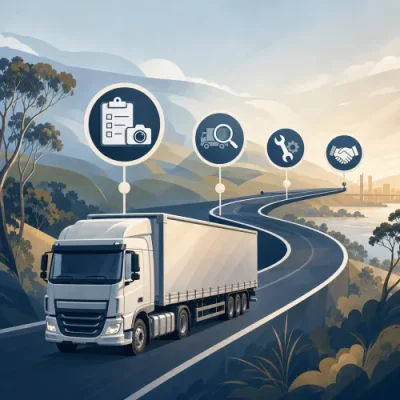
The commercial truck insurance claim process is not identical for every policy, but many claims follow a similar sequence. The insurer needs to understand what happened, whether the event is covered, the extent of the loss and who may be responsible.
- Notification: You tell your insurer or broker about the incident and provide initial details.
- Claim lodgement: You complete the claim form or online claim process and supply supporting documents.
- Policy and cover review: The insurer checks the policy type, insured vehicle, listed drivers, usage, exclusions, excesses and policy conditions.
- Assessment: An assessor, repairer, investigator or specialist may review the damage, circumstances and repair options.
- Liability and recovery review: If another party may be responsible, the insurer may consider whether costs can be recovered.
- Decision and settlement: The insurer decides whether the claim is accepted, partly accepted, declined or still requires more information.
- Repair, replacement or payment: Depending on the policy and claim type, the outcome may involve authorised repairs, a cash settlement, replacement, recovery costs or other covered benefits.
If you are reviewing cover before an incident occurs, the Insurance For Trucks homepage provides a starting point for general truck insurance assistance in Australia.
Different claim types can involve different checks
A truck accident insurance claim may be handled differently from a theft, fire, weather damage, liability or cargo claim. The policy sections involved can affect the documents required and how long the claim takes.
Accident damage claims
For collision or rollover damage, the insurer may want photos, repair quotes, driver details, registration information, police event details where applicable and a description of how the accident occurred. If the truck is not driveable, towing, storage and recovery arrangements may need to be approved or reviewed under the policy.
Theft or attempted theft claims
Theft claims often require police reporting details, keys information, proof of ownership, finance details if the truck is under finance and evidence of security measures. The insurer may investigate the circumstances before making a decision.
Fire, storm or malicious damage claims
Damage from fire, hail, flood, falling objects or vandalism may require evidence of the event, assessment of the truck and confirmation that the event is covered under the policy. Some policies treat flood, water damage or off-road use differently, so the wording matters.
Cargo, freight and goods in transit claims
Cargo-related claims can be more complex because the truck operator, freight owner, consignor, consignee, warehouse, subcontractor or customer may each have different contractual responsibilities. The insurer may ask for consignment notes, invoices, delivery records, photographs, temperature logs, incident reports or evidence of how the goods were secured.
Third-party property damage claims
If your truck damages another vehicle, building, loading dock, gate, bridge, road asset or other property, the insurer may need details of the third party's claim, evidence of damage and any correspondence received. Send letters of demand or legal documents to the insurer promptly rather than trying to resolve them informally.
Documents that may support a heavy vehicle insurance claim
Good documentation can make a significant difference to how efficiently a claim is reviewed. The exact requirements depend on the insurer and claim type, but common documents include:
- Policy number and insured business details.
- Truck registration, VIN or asset identification details.
- Driver licence details and driver statement.
- Incident report from the driver, depot or operations manager.
- Photos or video of the scene and damage.
- Police report or event number where relevant.
- Witness details.
- Repair quotes, assessor reports or towing invoices.
- Service and maintenance records, if requested.
- Load details, consignment notes or freight invoices for cargo claims.
- Finance contract details if the truck is financed.
- Correspondence from other parties, including letters of demand.
Keep copies of everything you send. If your insurer asks for more information, respond as clearly and promptly as you can. If a document is not available, explain why rather than leaving the request unanswered.
How excesses, limits and exclusions affect the claim
A claim may be accepted but still leave the operator with out-of-pocket costs. This is because commercial truck policies commonly include excesses, limits, sub-limits, conditions and exclusions.
An excess is the amount you may need to contribute towards a claim. Some policies have different excesses depending on the driver, vehicle, incident type, radius of operation, age of driver or claim history. For example, a windscreen claim, theft claim, inexperienced driver claim and major accident claim may not all have the same excess.
Limits and sub-limits cap how much the insurer may pay for particular types of losses. A policy might have separate limits for the vehicle, accessories, towing, recovery, clean-up, hire costs, downtime or cargo.
Exclusions are circumstances the policy does not cover. Common areas to check include unlisted or unlicensed drivers, incorrect vehicle use, unsafe or unroadworthy operation, excluded goods, contractual liabilities, wear and tear, mechanical failure, illegal activity, non-disclosure and failures to comply with policy conditions.
For a broader explanation of unexpected policy costs, see Hidden Costs to Watch Out for When Choosing Truck Insurance.
Repairs, assessments and total loss decisions
After a damage claim is lodged, the insurer may appoint an assessor or request a quote from an approved or nominated repairer. Some policies allow the insurer to choose the repairer, while others may allow a choice of repairer subject to policy terms.
The assessor may consider whether the damage is consistent with the reported incident, whether the truck can be repaired safely and economically, whether specialist parts are required and whether there is pre-existing damage. Heavy vehicles can involve longer assessment and repair timeframes because of parts availability, chassis or trailer damage, specialist bodies, refrigeration units, cranes, tippers, tankers or custom equipment.
If the truck is considered a total loss, the insurer may look at the insured value, market value, finance interests and salvage arrangements, depending on the policy. Operators should read the policy wording carefully because the settlement method can differ between agreed value and market value cover.
What about downtime and business interruption?
One of the biggest practical concerns for truck operators is downtime. A truck that is off the road can affect scheduled deliveries, subcontracting commitments, cash flow and customer relationships.
Not every truck insurance policy automatically covers downtime, hire vehicle costs, loss of income or additional operating expenses. Some policies offer these benefits as optional extensions or separate cover, while others exclude them or apply strict limits. The insurer may also require evidence of actual loss, hire costs, repair delays or business records before considering payment.
Before relying on downtime cover, check:
- whether it is included or optional;
- when the benefit starts and ends;
- whether there is a waiting period;
- the daily or total limit;
- whether hire vehicle costs are covered;
- what documents are needed to prove the loss; and
- whether delays caused by parts, repairer availability or dispute issues are treated differently.
If you need help understanding how policy wording may apply to a claim, a broker may be able to explain the process and help you prepare questions for the insurer. You can find general broker information through the Brokers page.
Why truck insurance claims may be delayed
Delays do not always mean a claim will be declined. Sometimes the insurer simply needs more information or must coordinate with assessors, repairers, recovery operators, third parties or legal representatives. However, certain issues can slow down the process.
| Possible delay | Why it matters |
|---|
| Incomplete claim details | The insurer may be unable to confirm what happened, who was driving or which policy section applies. |
| Missing documents | Police details, repair quotes, freight records or ownership documents may be needed before the claim can progress. |
| Liability dispute | If fault is unclear or another party disputes responsibility, further investigation may be required. |
| Policy condition concerns | The insurer may review driver listing, vehicle use, maintenance, licensing, disclosure or compliance issues. |
| Specialist repairs or parts | Heavy vehicle parts, custom bodies and specialised equipment can require additional assessment and sourcing. |
| Cargo or contractual complexity | Freight claims may involve multiple parties and contract terms that need careful review. |
Operators can often reduce avoidable delays by notifying early, keeping documents organised, responding to requests, and not authorising major repairs or disposal of damaged goods without checking the insurer's requirements.
When a claim may be declined or reduced
A declined or reduced claim can have serious financial consequences. Insurers assess claims against the policy wording and the circumstances of the event. Reasons a claim may be declined or reduced can include:
- the event is not covered by the policy;
- the truck, trailer, driver or business use was not correctly disclosed;
- the driver was not licensed or permitted to operate the vehicle;
- the vehicle was used outside the policy's stated purpose, radius or conditions;
- the loss falls within an exclusion;
- the damage was caused by wear and tear, gradual deterioration or mechanical failure rather than an insured event;
- reasonable steps were not taken to prevent further loss after the incident;
- fraudulent, misleading or incomplete information was provided; or
- the claimed amount exceeds a policy limit or sub-limit.
If you disagree with a decision, ask the insurer to explain the reasons in writing and identify the policy terms it is relying on. You can usually use the insurer's internal dispute resolution process. If the matter remains unresolved, eligible consumers and small businesses may be able to take the complaint to the Australian Financial Complaints Authority.
Practical steps to keep a commercial truck insurance claim moving
Truck claims can involve many moving parts, but a structured approach can help. Consider the following steps:
- Report the incident promptly: Early notification gives the insurer more opportunity to guide towing, recovery, repair and evidence requirements.
- Be accurate and consistent: Provide clear information. If you are unsure about something, say so rather than guessing.
- Keep the damaged property available: Do not dispose of damaged parts, cargo or equipment unless the insurer confirms it is acceptable.
- Track expenses: Keep invoices for towing, storage, clean-up, hire vehicles, temporary transport arrangements and repairs.
- Communicate with affected parties: Keep customers, brokers, finance providers and fleet managers informed where appropriate, but avoid admitting liability.
- Review the policy wording: Pay attention to excesses, limits, exclusions, notification duties and claims conditions.
- Follow up in writing: After phone calls, confirm key points by email so there is a clear record.
Questions to ask your insurer or broker after an incident
Clear questions can help you understand what is happening and what is expected from you. Depending on the claim, you may want to ask:
- What claim number should I use in all correspondence?
- What documents do you need from me now?
- Can I arrange towing, recovery or storage, or do you need to approve it first?
- Which repairer or assessor will inspect the truck?
- What excesses may apply?
- Are downtime, hire vehicle, towing, recovery or clean-up costs covered under my policy?
- Are there any policy limits or sub-limits I should be aware of?
- Should I respond to letters or calls from another party, or send them to you?
- What is the next step and when should I expect an update?
- If the claim is disputed, what review or complaints process applies?
Key takeaway
Truck insurance claims in Australia usually involve notification, documentation, assessment, policy review and a decision about repair, replacement, settlement or liability. The process can be straightforward for simple damage claims, but heavy vehicle insurance claims may become more complex where cargo, downtime, third-party damage, finance interests, specialised equipment or policy exclusions are involved.
The most useful preparation is to understand your cover before something goes wrong, keep accurate records and notify your insurer or broker early if an incident occurs. Outcomes depend on the policy terms, the evidence available and the circumstances of the claim.
Published: Monday, 17th Aug 2026
Author: Paige Estritori




Learnt the hard way that hire truck costs aren't automatic, worth checking those sub-limits before your rig's sitting in a yard.